

Associe la détection par tag à des caméras IA pour former un système d'alerte unifié qui protège les travailleurs, les visiteurs et le grand public.
Associe la détection par tag à des caméras IA pour former un système unifié qui protège les travailleurs, les visiteurs et le grand public.
Obtenir un devis
De nombreux chantiers réunissent à la fois des salariés permanents à qui l'on peut attribuer un tag et des visiteurs temporaires qui n'en reçoivent pas. Imaginez un centre de transfert de déchets où des camions livrent toute la journée, un chantier où les sous-traitants tournent chaque semaine ou un entrepôt où les coursiers entrent dans la zone de chargement. Dans chacun de ces cas, s'appuyer uniquement sur la détection par tag laisse un angle mort. Proximity Warning Plus le comble grâce à une couverture caméra IA fiable et avancée.
Trois couches intégrées fonctionnent ensemble pour assurer une protection de proximité complète à chaque personne présente sur votre site, qu'elle porte un tag ou non.
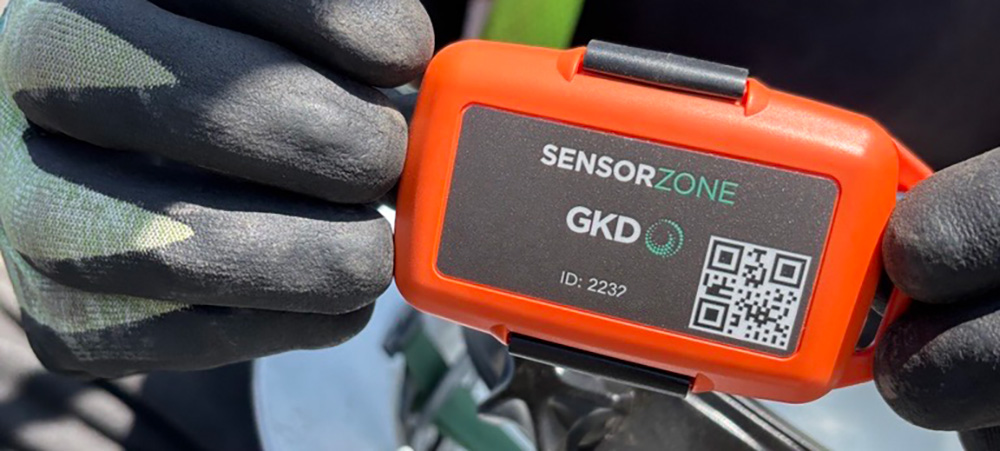
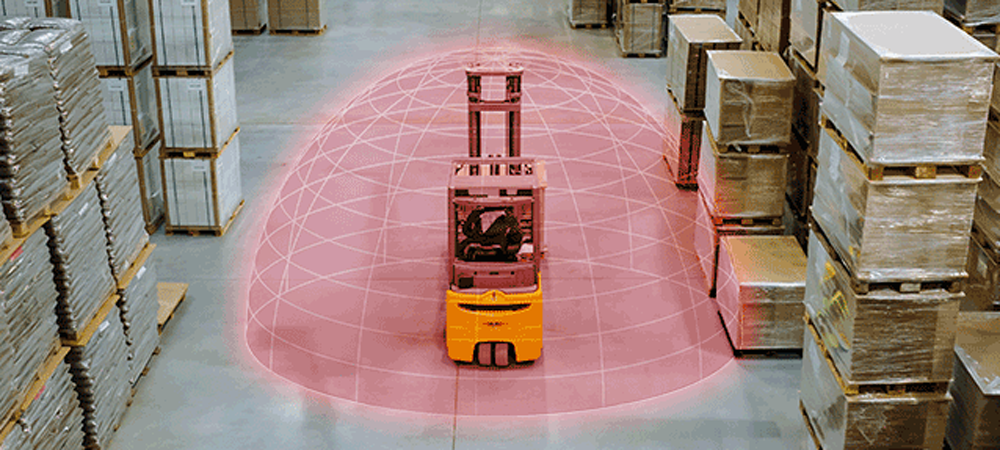
Comme pour Proximity Warning Core, les antennes montées sur le véhicule détectent les tags RFID dans un champ à 360 degrés.
Chaque travailleur équipé d'un tag est identifié individuellement, et des alertes se déclenchent dès qu'il entre dans une zone d'avertissement configurable. Les tags tiennent plus de trois ans sans recharge.
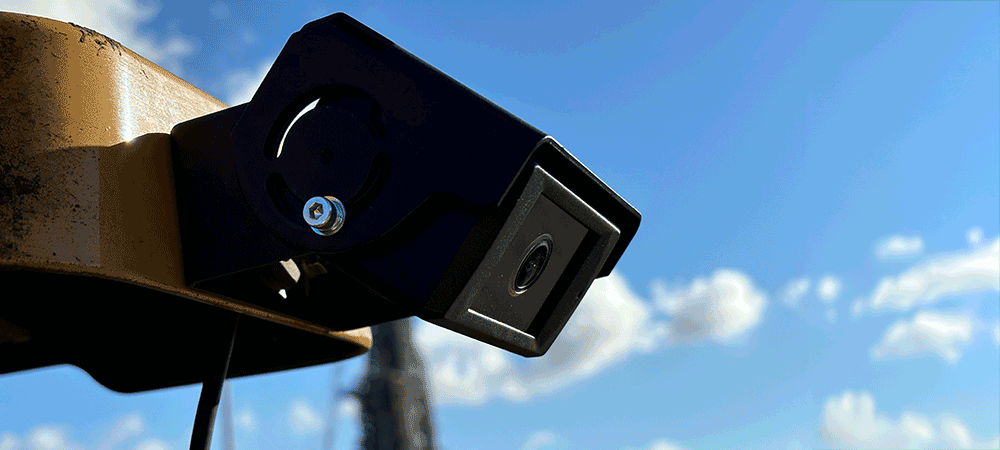
Les caméras embarquées utilisent des modèles d'apprentissage automatique entraînés pour identifier des silhouettes humaines autour du véhicule.
Lorsqu'une personne est détectée dans le champ de vision des caméras, le conducteur reçoit une alerte visuelle et sonore.

Proximity Warning Plus enregistre en continu la vidéo de toutes les caméras embarquées. Lorsqu'une alerte basée sur un tag se déclenche, le système marque la séquence pour faciliter sa récupération.
Les responsables sécurité peuvent consulter les presque-accidents depuis l'Insights Platform sans parcourir des heures de vidéo.
Tags RFID pour les travailleurs identifiés ; caméras IA pour les visiteurs sans tag et le grand public.

Détection complète autour de la machine et de son environnement grâce aux antennes de tag et aux champs de vision des caméras.
Enregistrement automatique déclenché par événement pour l'enquête sur incident et la constitution de preuves.

Tous les événements des deux systèmes sont intégrés dans un unique tableau d'analyse unifié.

Système fiable d'alertes sonores, visuelles et haptiques pour les opérateurs et les piétons.

Via l'API et par intégration directe avec les principales plateformes de gestion.

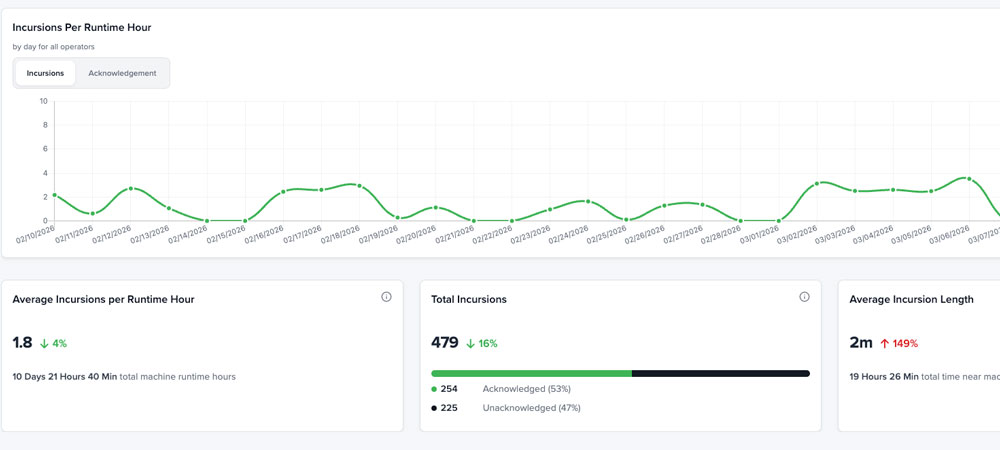
Chaque système Proximity Warning Plus transmet les données de détection des couches tag et caméra vers l'Insights Platform cloud de SensorZone. Les responsables sécurité disposent d'une vue unifiée de tous les événements, des clips vidéo et de l'état de la flotte, le tout depuis un seul tableau de bord.
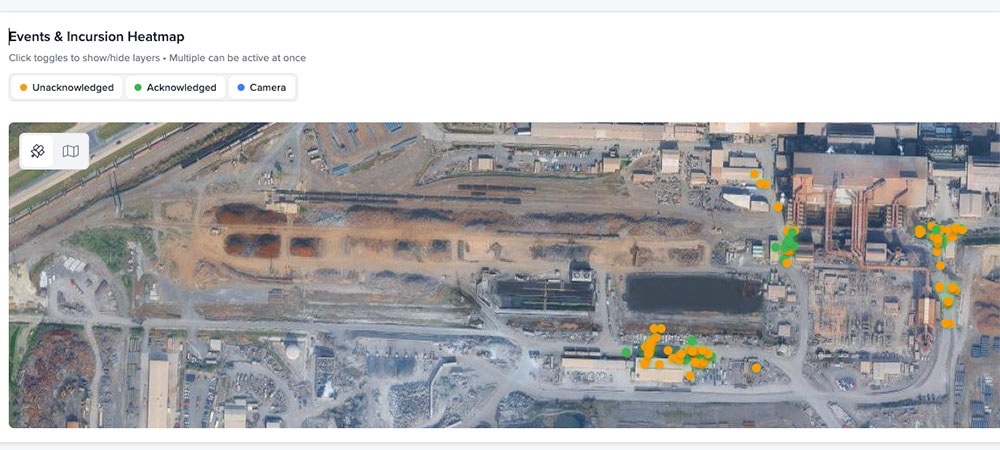
Tableau de bord unifié des événements
Consultez en un seul endroit tous les événements de détection issus des tags et des caméras. Filtrez par véhicule, opérateur, heure ou type d'événement pour repérer rapidement les tendances et les situations à haut risque.

Revue des clips vidéo
Lorsqu'une alerte basée sur un tag est déclenchée, le système marque automatiquement la séquence vidéo. Les responsables sécurité peuvent revoir le moment exact de chaque événement sans parcourir des heures d'enregistrement.
Rapports et conformité
Générez des rapports de sécurité détaillés pour les audits de conformité et les revues de direction.
Exportez les données au format CSV, connectez-les à Power BI ou intégrez-les directement via l'API pour automatiser vos flux de travail.
De nombreux exploitants déploient Proximity Warning Core sur la majorité de leur flotte et mettent à niveau vers Proximity Warning Plus les véhicules qui opèrent dans les zones très fréquentées ou ouvertes au public.
Idéal lorsque l'ensemble du personnel sur site peut recevoir un tag et être tenu de le porter. Offre une identification individuelle précise, une détection à 360 degrés et une analyse complète des données via l'Insights Platform.

Idéal lorsque le site réunit des salariés équipés de tags et des visiteurs, sous-traitants ou membres du grand public sans tag. Associe la précision du RFID à la couverture des caméras IA, pour que personne ne soit laissé sans protection.
Souhaitez-vous piloter Proximity Warning Plus au sein de votre organisation ou sur votre chantier ?
Si oui, ou si vous souhaitez simplement échanger avec un membre de notre équipe, remplissez le court formulaire ci-dessous et nous reviendrons vers vous.
Technologie de détection
RFID + caméra IA (double)
Portée de détection RFID
1–10 mètres (configurable)
Portée de détection caméra
Jusqu'à 20 mètres
Champ de détection
360° (RFID) + couverture caméra
Autonomie du tag
Plus de 3 ans (sans recharge)
Détection des personnes sans tag
Oui, via caméra IA
Diffusion vidéo
Diffusion en direct + téléchargement de clips à la demande
Temps d'installation
Moins de 2 heures par véhicule
Température de fonctionnement
-20 °C à +60 °C
Indice IP
IP67
Non. Proximity Warning Plus assure l'ensemble de la détection et des alertes à bord du véhicule en temps réel. Une connexion Internet n'est requise que pour téléverser les données d'événement et la vidéo vers l'Insights Platform cloud, et la synchronisation peut avoir lieu dès qu'une connexion est disponible.
La détection par tag RFID offre une identification individuelle précise et reste la méthode la plus fiable pour les travailleurs connus. La détection par caméra est très efficace pour repérer des silhouettes humaines dans la zone de danger, mais elle n'identifie pas individuellement la personne. Proximity Warning Plus utilise ces deux méthodes ensemble : les travailleurs équipés d'un tag bénéficient d'une identification précise, tandis que les personnes sans tag restent détectées et protégées.
Oui. Proximity Warning Plus a été conçu comme une voie d'évolution à partir de Proximity Warning Core. Les modules caméra et l'unité de traitement s'ajoutent à l'installation existante. Il est ainsi simple de commencer avec Proximity Warning Core et de mettre à niveau certains véhicules vers Proximity Warning Plus au fur et à mesure que les besoins de votre site évoluent.
Proximity Warning Plus peut s'installer sur pratiquement tout véhicule lourd, dont les pelles, les tombereaux, les chargeuses, les chariots élévateurs, les grues, les bulldozers et les bennes à ordures. Sa conception modulaire permet d'adapter le nombre d'antennes et de caméras à chaque type de véhicule et aux angles morts propres à chacun.
Lorsque le système basé sur les tags ou la caméra IA détecte une personne dans la zone de danger, la même séquence d'alerte progressive se déclenche sur l'écran en cabine. L'opérateur voit un avertissement cohérent vert-ambre-rouge, que la personne ait été détectée par son tag RFID ou par la caméra. Cela élimine toute confusion et garantit un protocole de réponse unique et fiable.
Les caméras Vision360 sont certifiées IP67 et conçues pour résister aux conditions difficiles des chantiers, notamment la poussière, la pluie et les vibrations. Si le champ d'une caméra est nettement obstrué, la couche de détection par tag continue de fonctionner de manière indépendante : il n'y a donc aucun point de défaillance unique dans le système de sécurité. L'Insights Platform surveille également l'état des caméras et signale tout problème au responsable sécurité.

